
Liquidation vs Stop-Loss: The Difference That Blows Up Futures Accounts
Liquidation vs Stop-Loss: Don’t Confuse Them
Stop-loss and liquidation are not the same. Learn how liquidation happens, why stops can fail in volatile markets, and how to avoid forced exits.
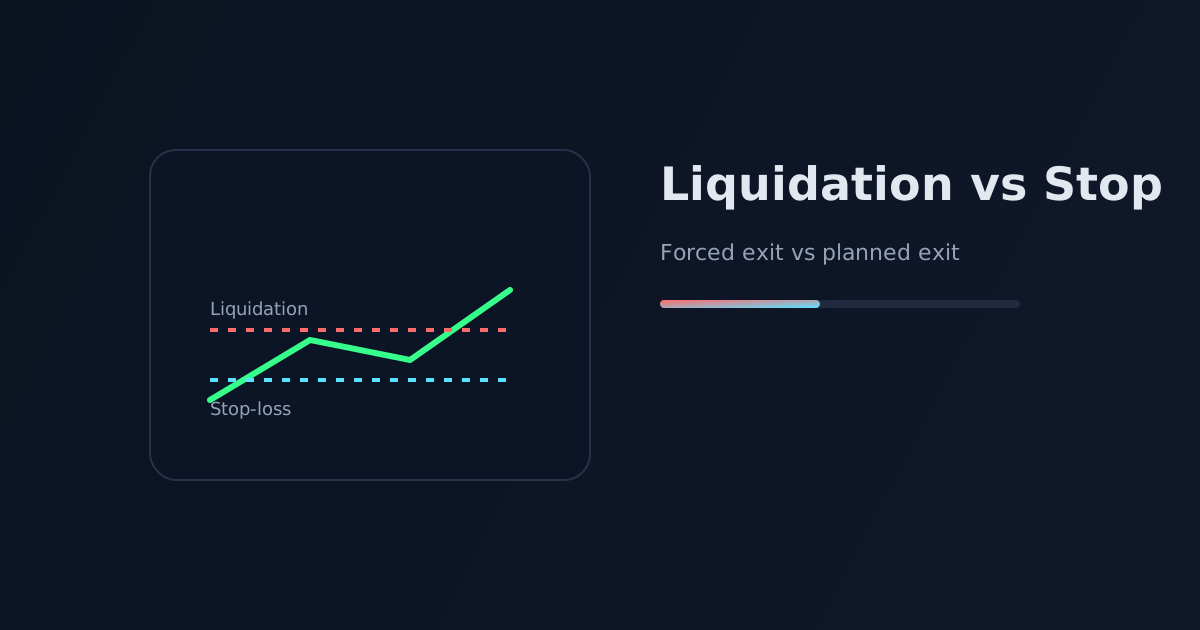
A stop-loss is a planned exit. Liquidation is a forced exit by the exchange when margin is insufficient. You must manage both.
Stop-loss (planned loss)
A stop closes your position at a defined level. Your loss is roughly stop distance times size, plus fees and slippage.
Liquidation (forced exit)
Liquidation happens when equity cannot maintain the position. High leverage, fast moves, and fees make this worse.
Why stops don’t always save you
Price can gap past a stop. Liquidation can trigger before the stop executes if liquidation is too close.
How to avoid liquidation
1. Size by risk, not margin. 2. Use moderate leverage. 3. Keep liquidation far beyond the stop. 4. Maintain margin buffer. 5. Avoid correlated stacking.
Tools:
Related guides
Continue the Learning Path
Move to the previous or next lesson to keep your progress structured.
Previous lesson
Leverage Explained: Why 10× Isn’t “More Risk” (If You Size Correctly)
Next lesson